This blog, authored by Laura Harris, Walking College fellow and education and policy consultant for Bike Easy, follows efforts to implement life-saving interventions on New Orleans’ busy and dangerous corridor, St. Claude Avenue.
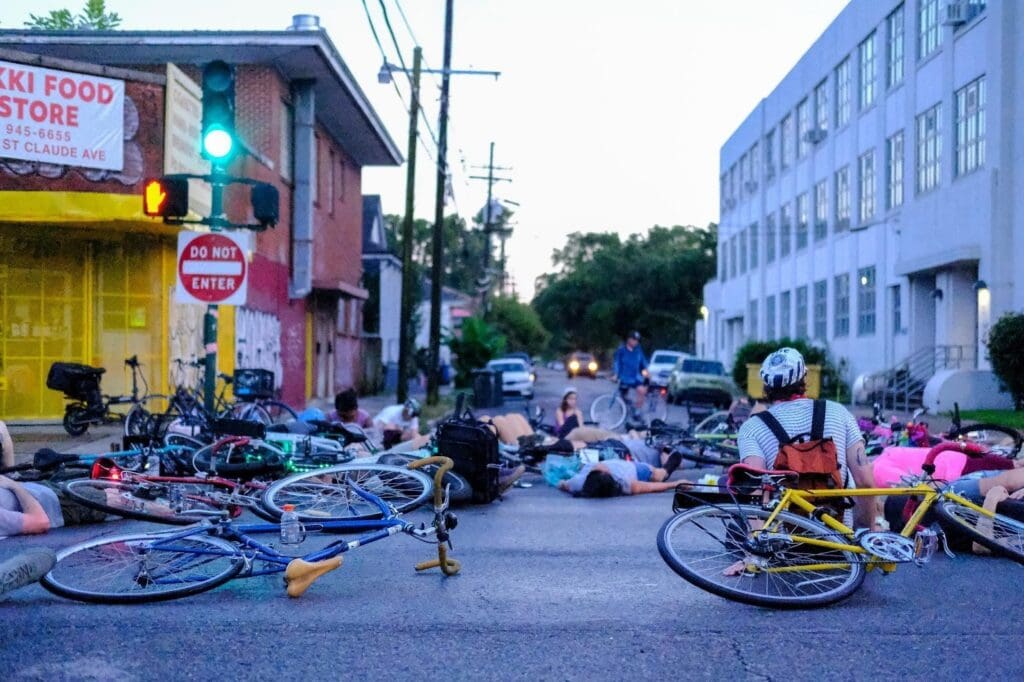
Walking along St. Claude Avenue in New Orleans, the imbalance is unmistakable: trucks and 18-wheelers barrel past within feet of people walking and biking, a painted bike lane the only so-called protection. As someone who uses this corridor regularly, I’ve experienced firsthand the daily risks — speeding traffic, drivers failing to yield, cars parked in the bike lane, and the constant tension of navigating a street that was never truly built for people.
The inadequacies of St. Claude are deeply rooted. Community members, advocates, and planners alike have long raised alarms about the lack of safe crossings, the absence of protected bikeways, and how fast-moving traffic turns a vital neighborhood artery into a place of peril. Driver behavior compounds this danger: motorists frequently speed well over the limit, make aggressive right and left turns through crosswalks, and block sightlines by parking illegally on the neutral ground. These behaviors aren’t just nuisances — they’re life-threatening.
What makes this all the more unacceptable is that St. Claude is one of the busiest corridors in the city for walking. Between Elysian Fields and Poland Avenues, the street is lined with dozens of bars, restaurants, and small businesses that draw neighbors and visitors alike to gather, dine, and connect. It has even held a Main Street designation, highlighting its role as a central, vibrant commercial and cultural corridor. This should be a street that anchors community life — a place where walking and biking feel safe and welcome. Instead, its design funnels cars and trucks at high speeds, forcing people into harm’s way.
Back in 2008, St. Claude Avenue made history as the site of New Orleans’ first bike lane. At the time, it felt like progress—a glimpse of what could be. But the simple painted stripe, unprotected and unaccompanied by pedestrian enhancements, proved insufficient. Sixteen years later, that limitation is painfully clear.
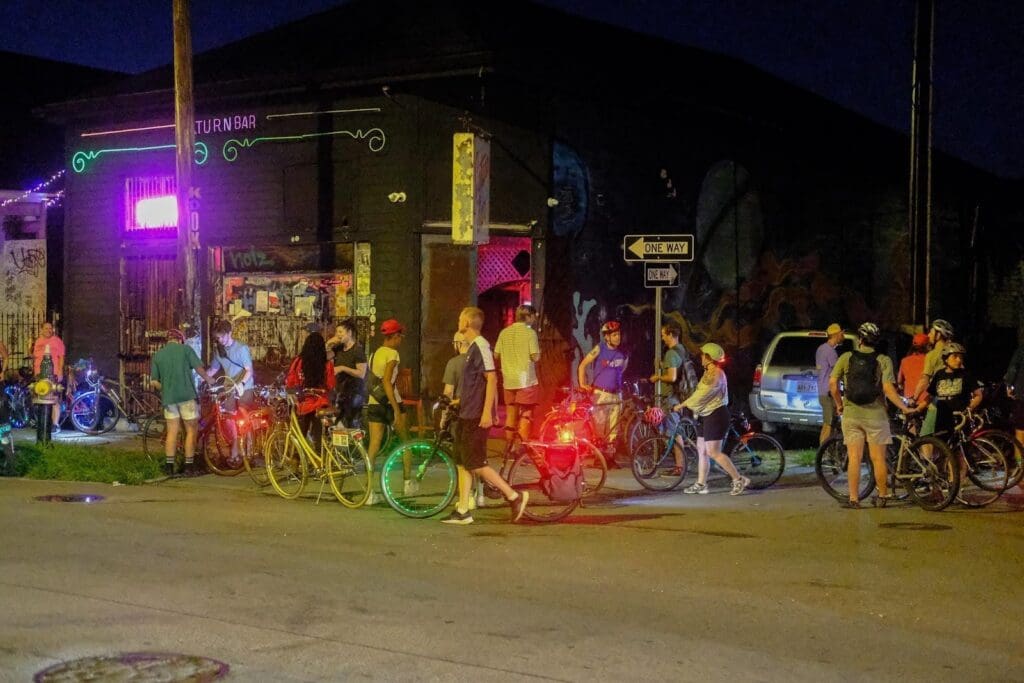
When I developed my Walking College Action Plan, the unsafe reality of St. Claude was at the center of it. With Bike Easy, I’ve continued elevating community voices, organizing rides and actions, and pressing the city and state to implement solutions we know work. Two years ago, Bike Easy and the New Orleans Complete Streets Coalition organized a community bike ride to show City Council members, community leaders, and engineers what it’s like to ride along St. Claude — layered between speeding cars, navigating treacherous crossings, on a corridor built for vehicles, not people.
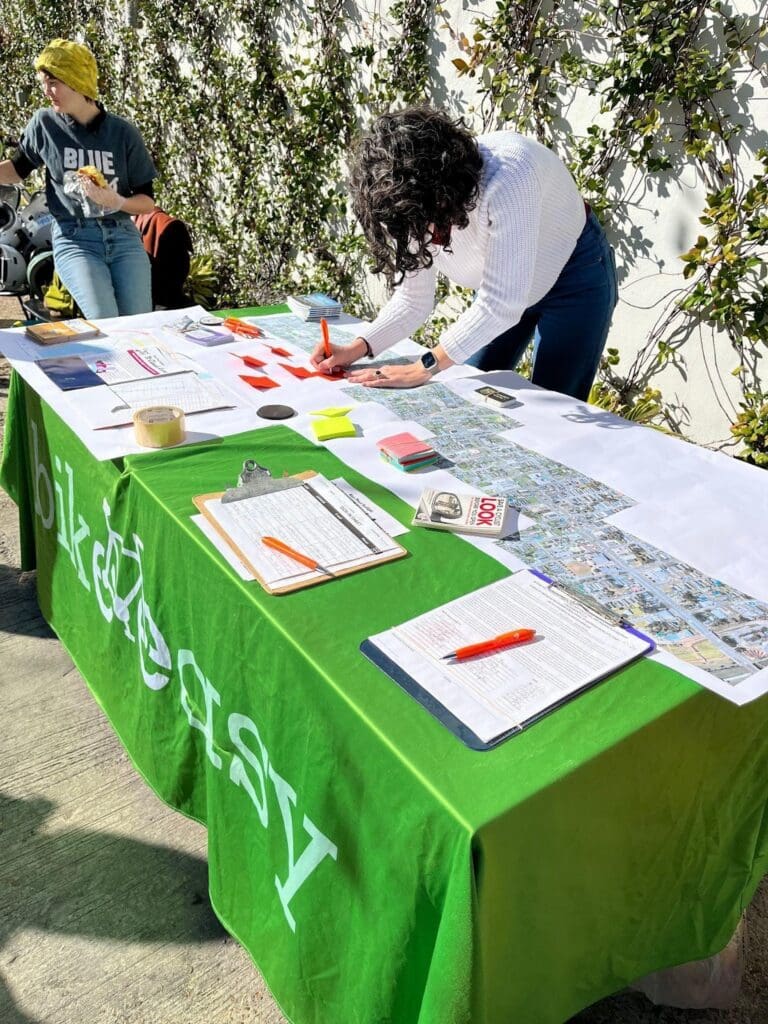
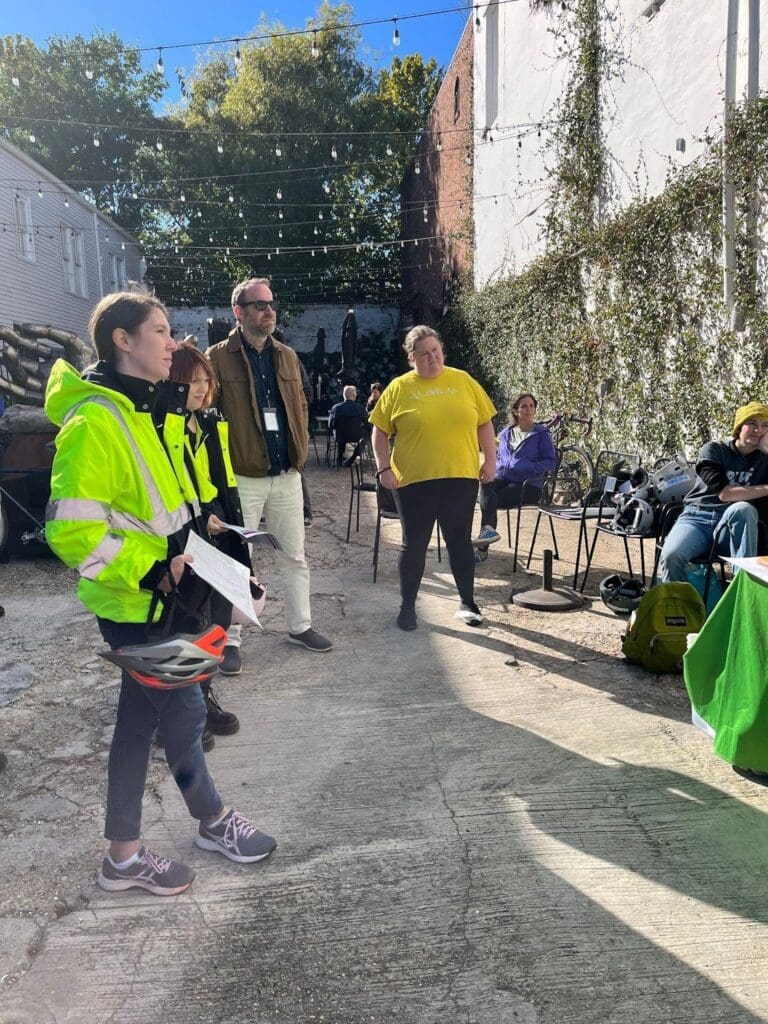
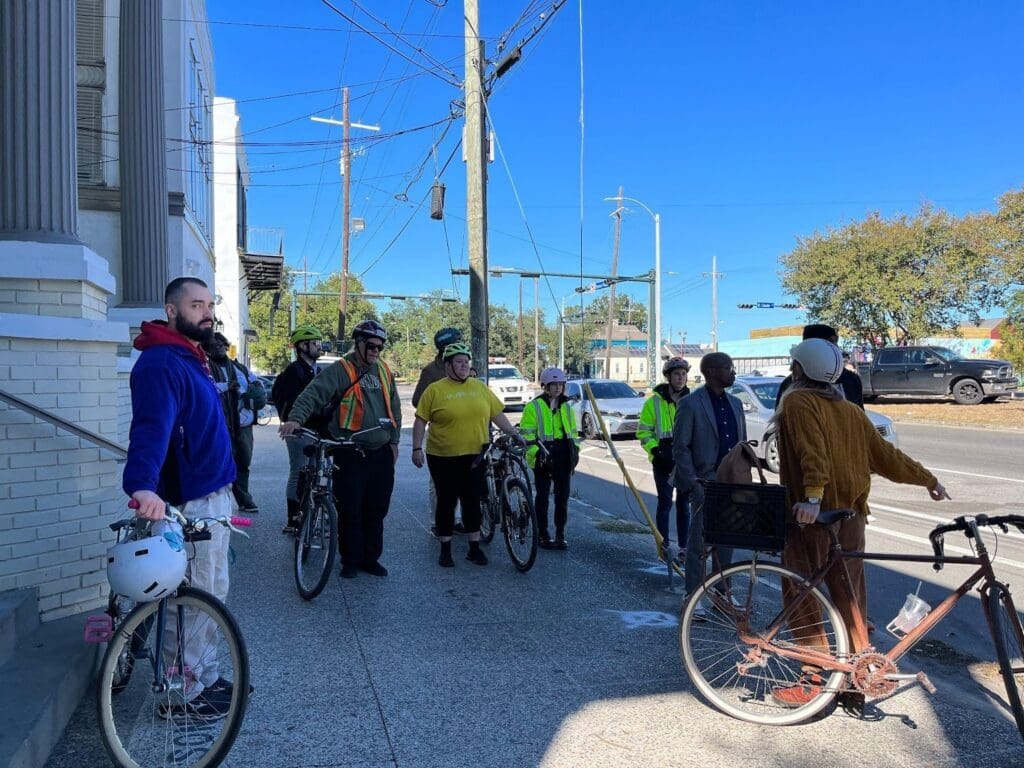
Yet, even those powerful experiences led to little improvement. Two years later, few safety upgrades have been made. Parking blocks the bike lane, speeding remains rampant, and illegal parking on the neutral ground reduces visibility—especially at crosswalks. These are clearly preventable issues, yet they persist, increasing danger for anyone walking or biking.
The contrast is striking. Just around the corner from St. Claude, on Elysian Fields Avenue, my own friend Ben Gregory was killed in 2015—a French Quarter artist biking home, struck in a hit-and-run. In the aftermath of his death, the city finally installed parking-protected bike lanes on Elysian Fields. Since their installation, there have been no fatalities of people biking on that corridor. The lesson is clear: when we design streets for safety, lives are saved.
We are again mourning two tragic losses on this unforgiving corridor.
🕯️ In Memory
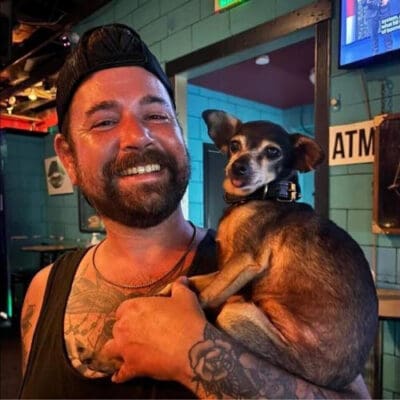
Michael Adam Milam — July 12, 2025
36 years old, French Quarter bartender, killed in a hit-and-run while biking near Alvar Street.

Miron Lockett — July 24, 2025
Beloved New Orleans singer and actor, fatally struck by an 18-wheeler at St. Claude and Franklin Avenue.
These lives remind us that behind every statistic are people with families, friends, and communities who loved them.
These tragedies hit in the midst of an election season — a moment when candidates are making promises, and communities are evaluating their futures. For those of us who walk and bike St. Claude, the question is simple: will our leaders finally act? Will they ensure this corridor values life and community over unrestrained traffic speed?
We must continue pressing our state representatives and LADOTD to honor and deliver on their commitments to street safety. Equally, our City Council must do more: collaborate with the state to transform dangerous state-controlled routes into safe, complete streets. Too often, these corridors are treated as commuter thoroughfares, not neighborhood streets where people walk, bike, shop, and gather. That disconnect has proven deadly.
Yet there is reason for hope. The renewed attention on these tragedies — coupled with years of advocacy — brings momentum. Across New Orleans and the nation, the consensus is growing: safe streets are not optional — they are essential.
St. Claude’s story is both a caution and a call to action. Those stripes painted back in 2008 should not remain a symbol of half-measures. Instead, they must represent the starting point of a long-overdue transformation — one that ensures we no longer accept preventable deaths as the cost of doing nothing.
👉 To learn more about the campaign for a Safer St. Claude, click here.
This publication was made possible by the Centers for Disease Control and Prevention (CDC) (Contract #47QRAA20D003W). Its contents are solely the responsibility of the authors and do not necessarily represent the official views of CDC. These efforts are part of the CDC’s Active People, Healthy NationSM Initiative that is working to help 27 million Americans become more physically active by 2027.