
This blog is authored by Liv Hawkins, a 2025 Walking College fellow based in Spartanburg, South Carolina.
Back when highways typically went straight through urban centers, Spartanburg, South Carolina’s overbuilt East Main Street corridor served as U.S. Route 9. East Main Street feeds into the city’s urban core, which includes car-free Morgan Square—an area with many pedestrians and cyclists.
In the 1970s, St. John Street was widened to accommodate East Main Street’s heavier car traffic, dividing a section of downtown Spartanburg. But that didn’t make East Main Street safer or more walkable. Rather, with the corridor maintaining its highway-like width and lacking crosswalks along a significant stretch, it has become hostile to pedestrians and cyclists—especially when compared to Spartanburg’s traditional downtown only a stone’s throw away. Despite the presence of churches and businesses on either side of East Main Street, as well as proximity to Converse University and the Converse Heights neighborhood, its street design forces those who need to cross to dodge fast-moving cars.
Since St. John Street and Church Street split the downtown area from the cultural arts district, I looked at how to improve safe walkability on St. John Street as part of my Walking Action Plan for the America Walks 2025 Walking College. My recommendations included a treed median to combat the urban heat island effect, better crossings for pedestrians, and artistic crosswalks to better signal to drivers this is an intersection where people cross.
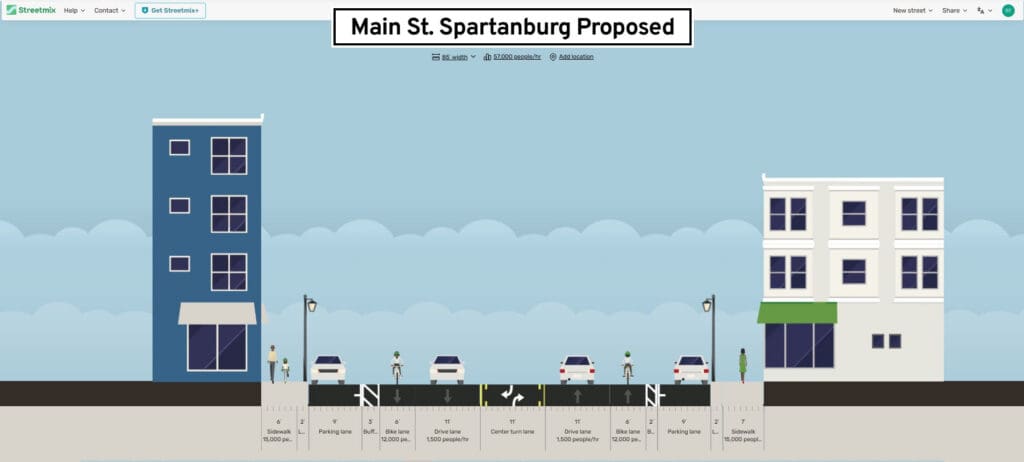
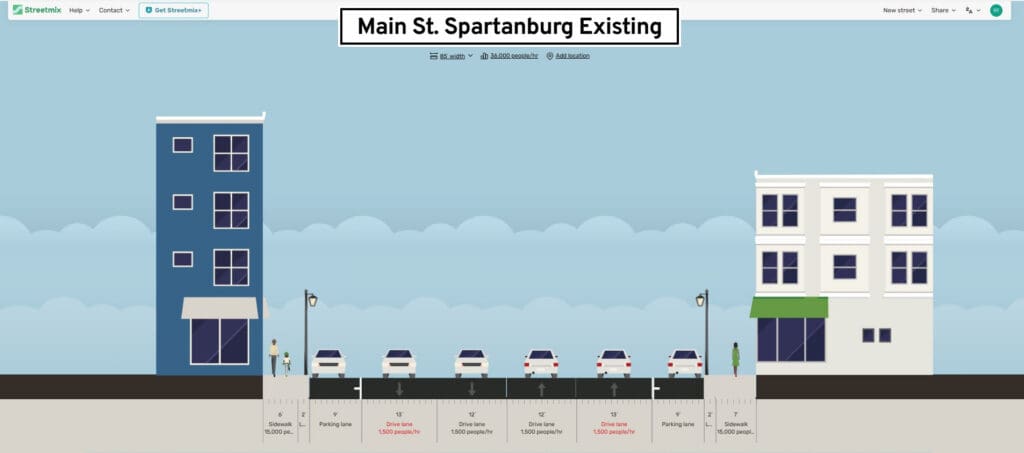
In April 2026, the South Carolina Department of Transportation (SCDOT) and City of Spartanburg announced major corridor improvements along a section of East Main Street leading into downtown. Tragically, these changes came after a fatality in February, when a 75-year-old churchgoer was struck by a vehicle while attempting to cross the street to her place of worship. The plan put forth by SCDOT proposed converting four travel lanes to three, with one serving as a center turn lane. It also included an unprotected bike lane up against traffic and the retention of on-street parking. Importantly, the plan was based upon an existing resurfacing schedule, so only new asphalt and paint were within the scope of this project rather than curb protection or a treed median.
The city and SCDOT presented the plan’s specifics and sought public input during an in-person meeting. As a founding member of Strong Towns Spartanburg’s leadership team, I used our mailing lists to mobilize folks to attend the meeting to support the project and push for adjustments. Primarily, switching up the proposed lane configuration to make the added bike lanes parking protected, since the corridor connects Converse University, the Converse Heights neighborhood, and other folks directly to downtown. While bike lanes alongside traffic may be acceptable for someone like me who is able-bodied and comfortable with urban cycling, parking-protected lanes would provide a more comfortable and safe mobility experience for local college students and families.
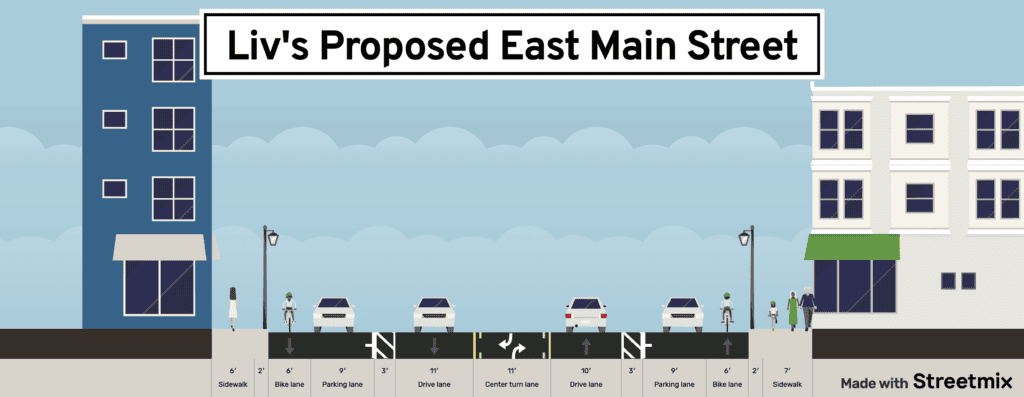
During my time in the Walking College, I learned about many helpful tools to help effectively communicate changes I would like to see in my city. SCDOT visualized its proposed changes to East Main Street using Streetmix, a virtual street redesign platform. I used the same tool to adjust SCDOT’s vision so the bike lanes were parking protected, and I published the remixed street design in an article I wrote for The Walking Spartan, my newsletter. Strong Towns Spartanburg sent an email with the article, updated visual, and the SCDOT project viewer to supporters, and I posted a reel on their Instagram showing supporters where the bike racks were located at the meeting building to encourage attendance.
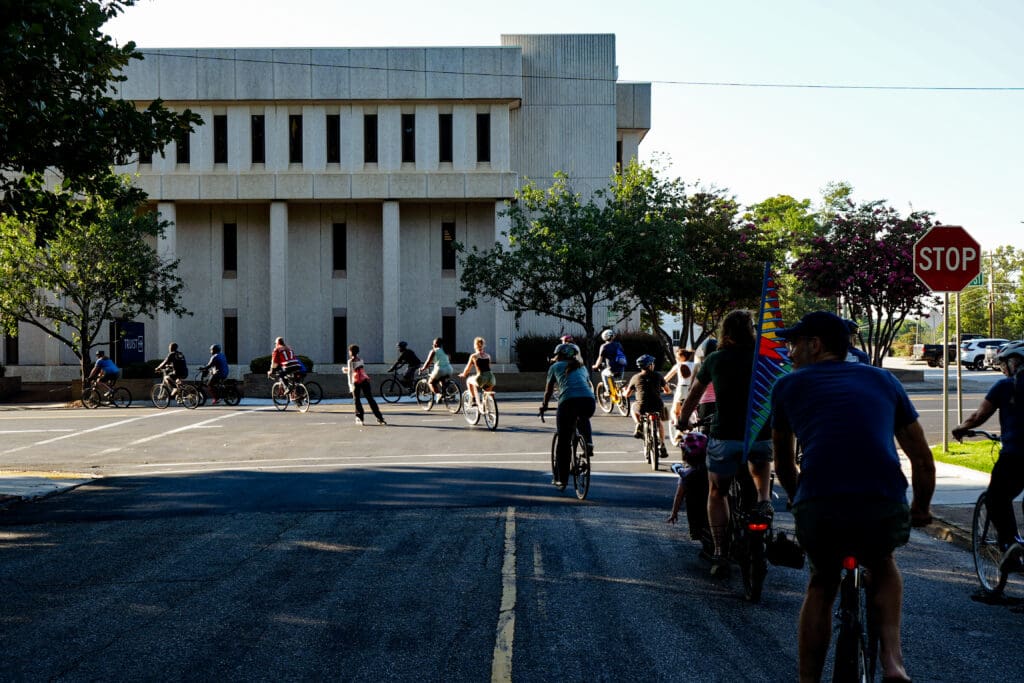
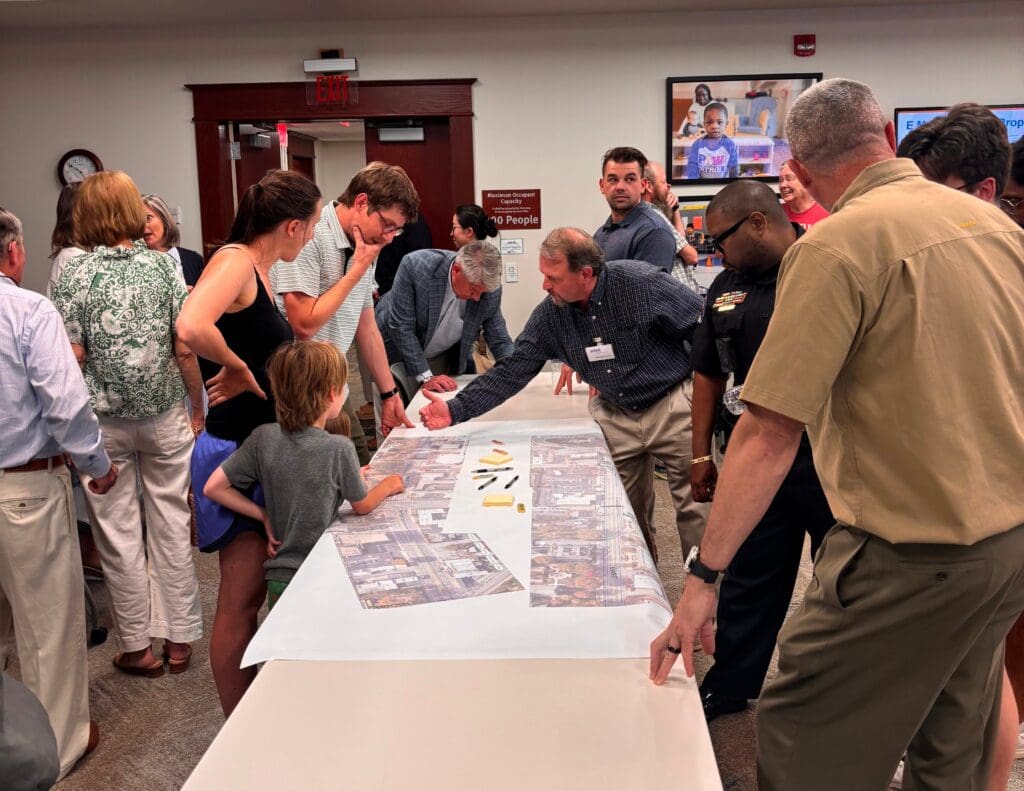
On the evening of the meeting, my group and I were blown away at the coalition we effectively mobilized. There were multiple families who biked together to the meeting. One mom, Alicia, told me as she entered the room that if we had all driven, there would be no room in the parking lot. The meeting began with a presentation from SCDOT staff and a Q&A session. I brought my printed-out Streetmix visual of the parking-protected bike lanes and used the Q&A as an opportunity to introduce the idea to the room and ask why this safer bike-lane design was not considered. I got nods around the room. In the second half of the meeting, everyone mingled and looked at maps of SCDOT’s narrowed corridor—and I overheard many people advocating for my proposed change.
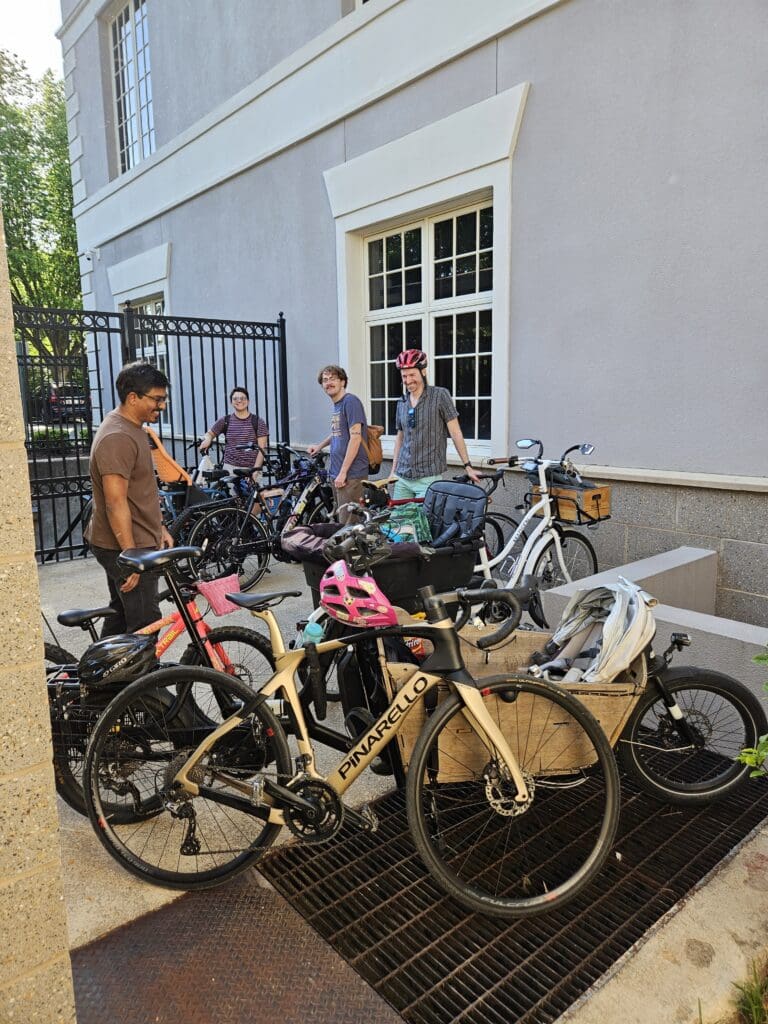
Now, this meeting was not all positive. A small minority saw any change to East Main Street as potentially causing traffic congestion. One woman who worked nearby said she supported the changes because she had to “play Frogger” across the road everyday due to the lack of crosswalks and fear she could be hurt or killed. One of those against any changes to East Main Street cut her off to say that, sometimes, “you have to let the chips fall where they may.” There were other similar comments, but many attendees looked off put by each one.
The overall vibe by the second half of the meeting was an optimistic one where families, advocates, city council members, and city and SCDOT staff discussed how the East Main Street corridor could change to extend Spartanburg’s downtown footprint and better protect vulnerable road users. In the end, I got the feeling that if this project moves forward and is successful, it could very well be phase one of future improvements. I also was interviewed by a local news channel and had dinner with several friends afterwards to continue conversations.
By early June 2026, changes were underway. The corridor was narrowed from four lanes to three, and the new bike lanes were parking protected—one of the first instances of this configuration in the state as implemented in an SCDOT project.
My long-term goal is an East Main Street that includes more substantial protection for pedestrians and cyclists, and this process showed me just how strong the Spartanburg community’s dedication is to safer streets.
Follow @TheWalkingSpartan on Instagram!
Resources:
- What East Main Street Is For (Carolina Ecology)
- A Section of East Main Street in Spartanburg Will See A Road Diet (The Walking Spartan)
- Recapping the Public Input Meeting for the East Main Road Diet (The Walking Spartan)
- As construction reshapes downtown Spartanburg, the city could soon change its streets (The Post and Courier – Spartanburg)
- Road diet proposed for portion of E. Main Street in Spartanburg (WSPA)
- East Main Street Road Diet (SCDOT)