
October 1–8, 2026 marks the sixth annual Week Without Driving (WWD)! More than a third of the U.S. population doesn’t drive—by choice or necessity. Yet our transportation system prioritizes moving cars over people, and more often than not leaves nondrivers without options.
This October 1–8, 2026 marks the sixth annual Week Without Driving (WWD), which exists to call attention to the challenges nondrivers face in navigating their communities and asks what we can do to build better, more accessible transportation that works for everyone.
This WWD coincides with the release of Cheated by Car Dependence: Drivers and Nondrivers in the United States, a new report from the Climate and Community Institute (CCI), Nondrivers Alliance, and America Walks.
The report draws on national polling from Data for Progress, analysis of US Census microdata, and interviews with drivers and nondrivers. It shows who is paying the price of car dependence, and how policymakers can give everyone real choices in how they get around—especially as gas prices continue to rise.
Key Points
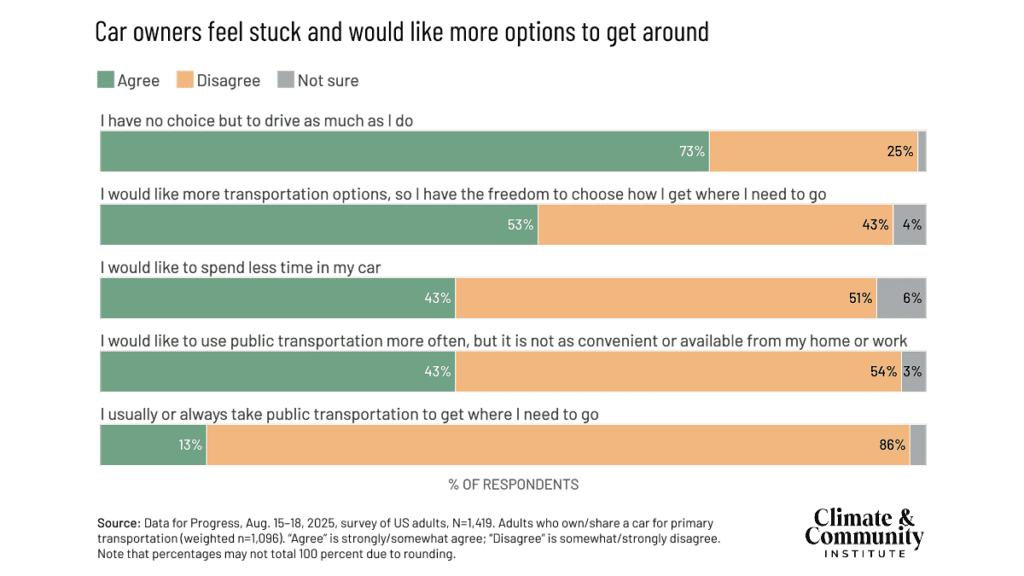
- Drivers feel trapped: 73 percent of drivers say they have no choice but to drive as much as they do, and 53 percent want more transportation options.
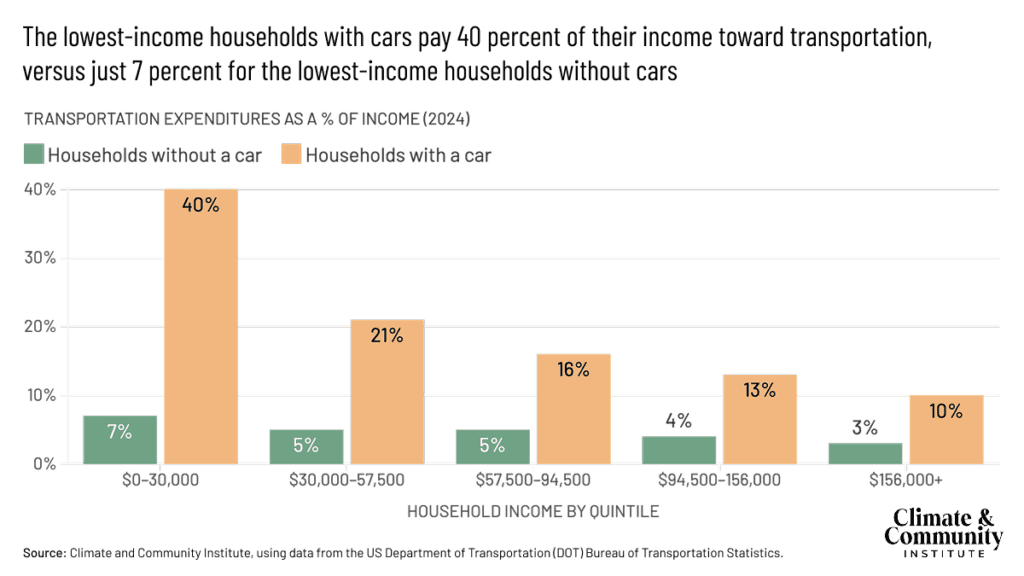
- Cars drain tight budgets: The lowest-income households with cars spend 40 percent of their income on transportation compared to 7 percent for those without cars.
- Nondrivers live everywhere: About 30 percent of people in rural and low-density communities, more than 37 million people, live in households with fewer cars than driving-age people.
Why Now?
Federal transportation funding under the Infrastructure Investment and Jobs Act expires on September 30, 2026. Congress is now renegotiating funding for highways, transit, and rail. The Republican BUILD America 250 Act would put more money into highways and less into transit, locking in even more car dependence.
What Policymakers Can Do
The report lays out solutions that work in cities, suburbs, and rural towns, including:
- Overhauling federal and state Departments of Transportation so that funding and planning serve everyone, not just drivers.
- Investing massively in diverse transportation options, so people can choose how they get around: by foot, bike, transit, and car.
- Scaling up rural solutions, including local rideshare programs, bikeshare and e-bike vouchers for trips under 5 miles, effective rural transit, better street design, and investment to support walkable communities.
A special thank you to report authors Emmett Hopkins and Kira McDonald at CCI, and Ruth Rosas at the Nondrivers Alliance.
Additional Resources:
- Learn more about Week Without Driving
- Nondriver Data (Week Without Driving)