
America Walks is thrilled to welcome four new members of our Board of Directors, including Heyden Black Walker, whose introduction is below. View the rest of our board and staff here.
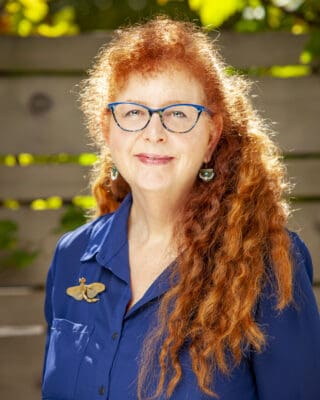
Heyden Black Walker joined the Board of America Walks in April of 2026. She comes to us from her hometown of Austin, Texas, where she works tirelessly to promote walkability, safety, and access throughout the city. She serves as the Director of Planning at Black + Motal Architecture and Urban Design, currently chairs the Board of Directors for local nonprofit Safe Streets Austin, and was a founding member of the City’s Pedestrian Advisory Council. Heyden co-created this blog post with her daughter Addie Walker, Public Health Research Lead at Black + Motal Architecture and Urban Design.
In the fall of 2025, my hometown of Austin, Texas celebrated 10 years of its Vision Zero program. Vision Zero, a movement which began in Sweden in the 1990s, is the idea that the only acceptable number of deaths and serious injuries on our roads is zero, and that crashes are preventable using data-informed policies and interventions. Over the last 10 years Austin has made major improvements on City-owned roads to reduce the frequency and severity of crashes. How we got here is a testament to Austin’s advocacy network, City staff and forward-thinking local leaders, and a commitment to partnership for the benefit of the entire city.
In September of 2015, Austin reached a horrific new record—the highest number of traffic fatalities in the city in a single year: 102. In recognition of this milestone and in a call to action to City leadership, Austin’s vibrant and active advocacy community put together the first Vision Zero vigil in the city. Advocates stood outside City Hall and held a remembrance for those 102 people who had lost their lives on Austin’s streets, and for all those others who had been injured or affected by traffic violence.
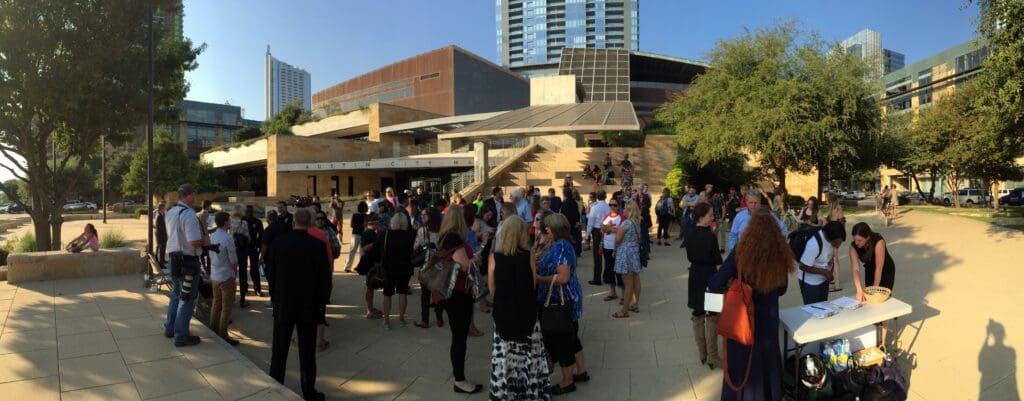
Advocates spoke at City Council meetings, reading off the name and age of every single person who had been lost to traffic violence. It took five speakers, reading names one after the other for their three allotted minutes of speaking time, to get through the list.
At the time, Austin had a Vision Zero Task Force to provide recommended safety policies. In October of 2015, City Council adopted the Vision Zero goal of zero traffic-related fatalities and serious injuries as official City policy. But the real success came in 2016, when City Council adopted a Vision Zero Action Plan and allocated $6 million to improve safety at high-crash intersections. Further funding for the Action Plan came from a 2016 voter-approved bond.
The combination of the adopted Plan and substantial funding gave the City power to hire its first ever Vision Zero Safety Officer, who put together a fantastic Vision Zero team. They created a Vision Zero dashboard, a comprehensive resource of every documented crash, serious injury, and fatality on Austin’s roads. The data is categorized by modality, time of day, location (including an interactive map), and demographics.
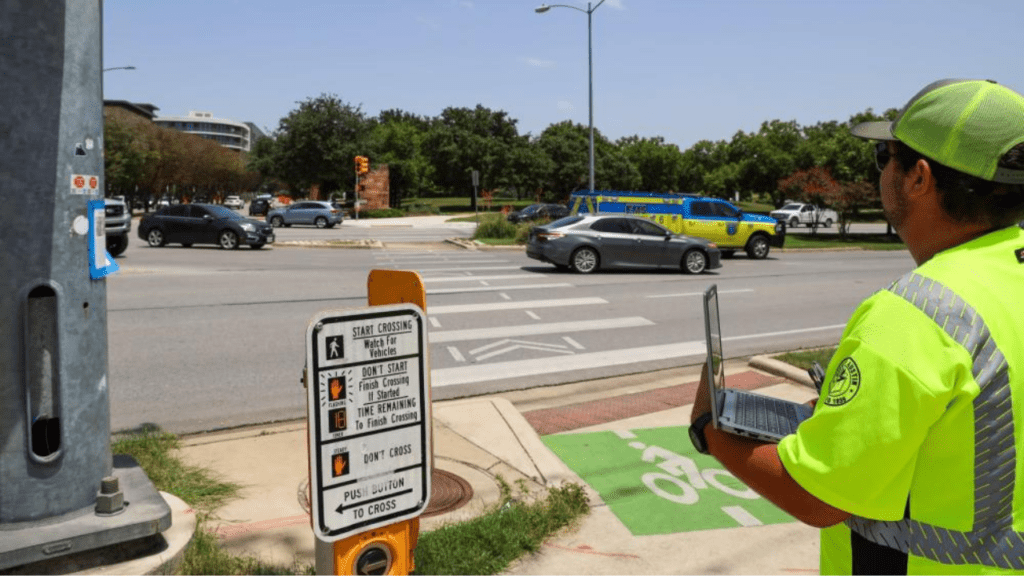
Having this data allowed the team to make informed, data-driven infrastructure investments focusing on high-crash intersections. The first intervention was built in 2017. Since then, Vision Zero has completed 29 major intersection projects, over 12 miles of street lighting improvements, 28 speed management projects, and low-cost, systemic safety improvements like access management treatments and traffic signal upgrades at hundreds more locations on City of Austin-owned streets. Vision Zero projects over the last 10 years have led to a 38% reduction in serious injury and fatal crashes, and a $78 million annual reduction in crash costs.
“Each project translates into safer communities, safer trips to school, safer walks to the bus stop. The result is fewer crashes and injuries – something we can be proud of. But we should also remember what those numbers mean. It’s fewer lives turned upside down, fewer families grieving, more people who make it home each day. Behind every data point is a future that is still intact” – Council Member Paige Ellis, 2025
Austin’s Vision Zero program is a remarkable success. It may be attributed to the Vision Zero Team’s commitment, to crossdepartmental coordination, to voter-approved bond funding, to public support and celebration by advocates, to data-driven solutions, to concrete poured and intersections renovated. But the truth of the matter is that real problems require real solutions. They require advocates to push for a better world, for local governments to put real funding and resources towards the cause, and for all of us to reflect on our wins. I encourage everyone wholeheartedly to read through the City’s 10 Year Vision Zero report, and to reflect on how best a partnership between advocates and local government can improve their cities.
My deepest acknowledgements and thanks to Lewis Leff, Austin’s inaugural Vision Zero Safety Officer, and Joel Meyer, the current Vision Zero Safety Officer, as well as the entire Vision Zero team for their commitment to the cause. My thanks to the 2015 Austin City Council, especially my late friend Chris Riley, and City Staff for believing in this vision and for putting real resources behind it. My thanks to all the advocates, especially those who have lost loved ones and who continue to fight so that others will not know their suffering. My thanks to everyone involved in and supporting Safe Streets Austin in continuing to move this effort forward. And finally, my thanks to America Walks for highlighting success stories like these.