This blog follows the success story of how Costa Mesa, California, is taking action to build a more walkable community, an effort spearheaded by Arlis Reynolds, Costa Mesa City Councilmember, Walking College fellow (2019), and current chair of the America Walks Board of Directors.
If you needed to buy a car in southern California, there’s a strong chance you’d head to Costa Mesa.
About 35 miles south of Los Angeles, the city of around 115,000 was once a rural farming community. Following its incorporation in the 1950s, it developed, like many communities of the era, almost exclusively around the car.
The city is divided by multiple interstates and large arterials, with development largely spread out around these channels in sprawling, single-use land use patterns dotted by parking lots. For many people, walking or other modes of transportation were not embraced as viable or safe means of getting around. Fittingly perhaps, Costa Mesa has long been a hub of the regional car trade, with one of its busiest roads being known as “The Harbor Boulevard of Cars” for all of the auto dealerships located along it.
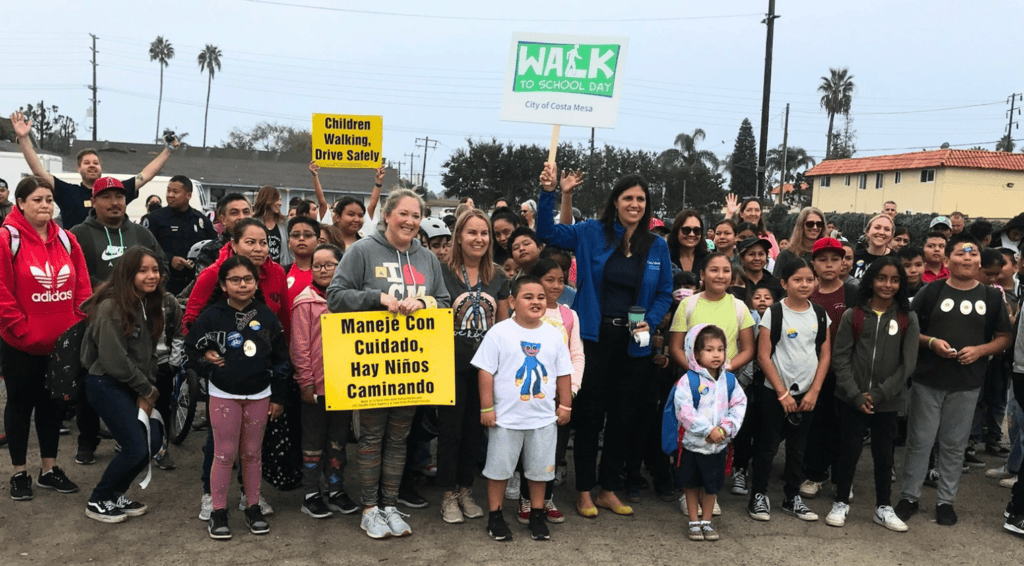
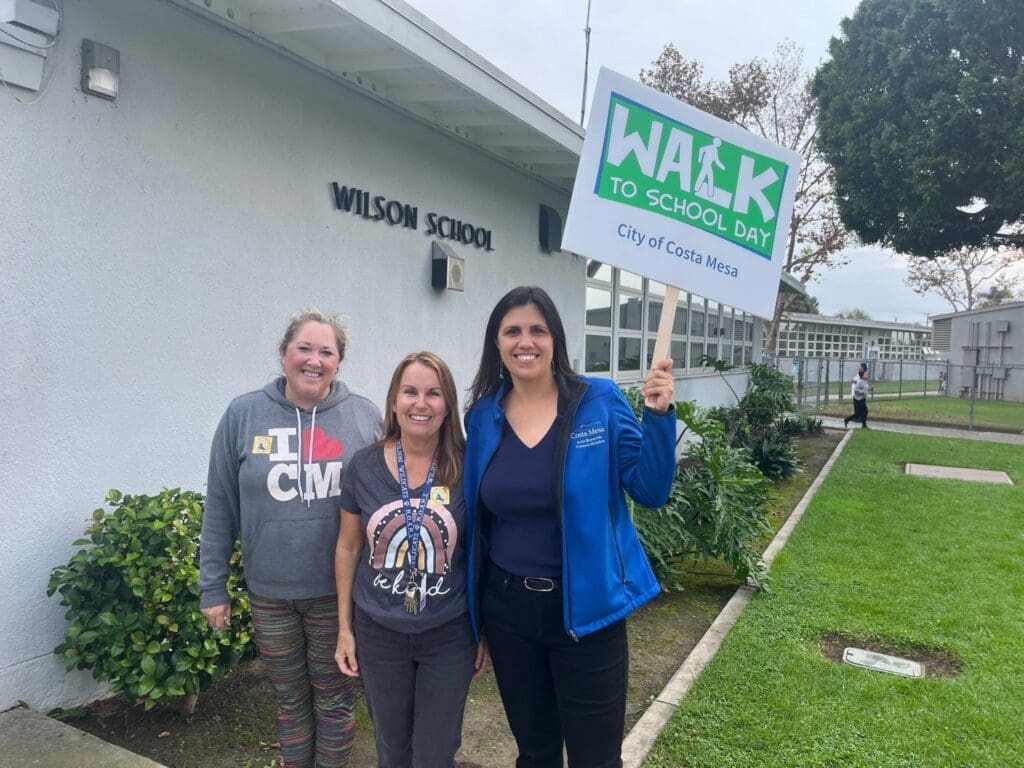
But Arlis Reynolds (2019 Walking College Fellow) sees a ton of potential for reconfiguring her city, even as she nears the end of her second and final term as a Costa Mesa councilmember. She points to successes over the past several years that are already yielding dividends in making her community more walkable and livable, and maybe even helping to change the culture of her hometown.
In 2019, months after she was first elected to City Council, Reynolds participated in America Walks’ Walking College at the suggestion of a constituent interested in making Costa Mesa more walkable. By 2022, when she won office a second time, walkability was a centerpiece of her platform. Today, Reynolds is chair of the board of America Walks.
“Participating in the Walking College—learning about the whats, whys, and hows of walkability—really shaped my two terms as councilmember,” Reynolds said. “Through the Walking College, I realized almost all of my priorities—safety, climate action, economic development, community health, community engagement, and a vibrant social environment—are natural outcomes of a walkable city. So I focused on walkability as a way to engage support for and advance all those other topics.”
“We are building a movement for walkability and bikeability,” Reynolds, an MIT-trained mechanical engineer working in the clean energy sector, said in an email. “From community walks and bike rides to real infrastructure (including street trees and concrete for curb extensions, barriers, and more sidewalks), we have a plan for evolving into a more walkable community.” Reynolds said her city is in the final stages of a citywide rezoning project called Neighborhoods Where We All Belong, which encourages mixing residential with commercial zoning and walkable development along Costa Mesa’s major corridors.
Reynolds is proud that many of the successes that have come out of Costa Mesa City Hall were inspired by her Walking Action Plan for the 2019 Walking College. Among the biggest wins over the past several years, Reynolds notes that Costa Mesa has:
- Hired an Active Transportation Coordinator within the Transportation Division
- Developed its first Pedestrian Master Plan, which was adopted in 2024
- Funded a citywide sidewalk assessment
- Doubled the city’s budget for sidewalk maintenance, with expectations of further increases based on sidewalk assessments
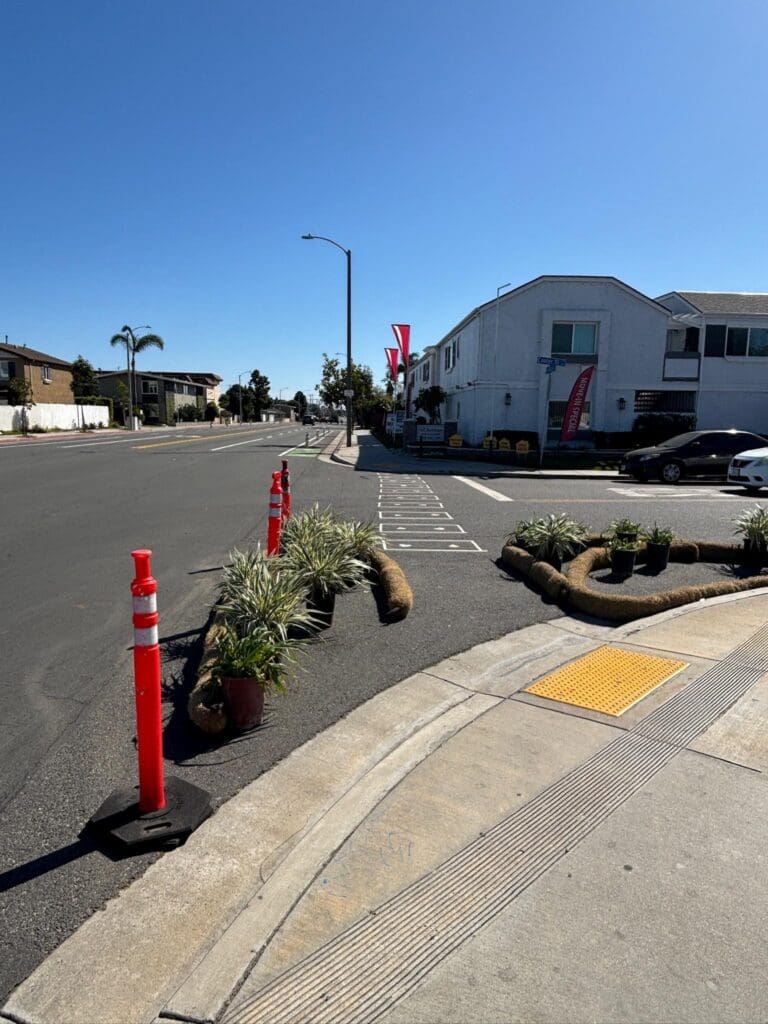
- Installed multiple new signalized crosswalks, curb extensions, and street trees in high pedestrian-traffic area zones
- Installed a traffic-calming project on West 19th Street and Placentia Avenue, which has reduced speeds and almost eliminated collisions and injuries at one of the most crash-prone intersections in the city
- Adopted a City Council resolution in 2025 requesting safe street improvements on State Road 55 (Newport Boulevard), which intersects the city and is one of the most dangerous stretches for pedestrians and cyclists in the community
- Initiating a sidewalk art program to bring more interest and joy to the walking experience

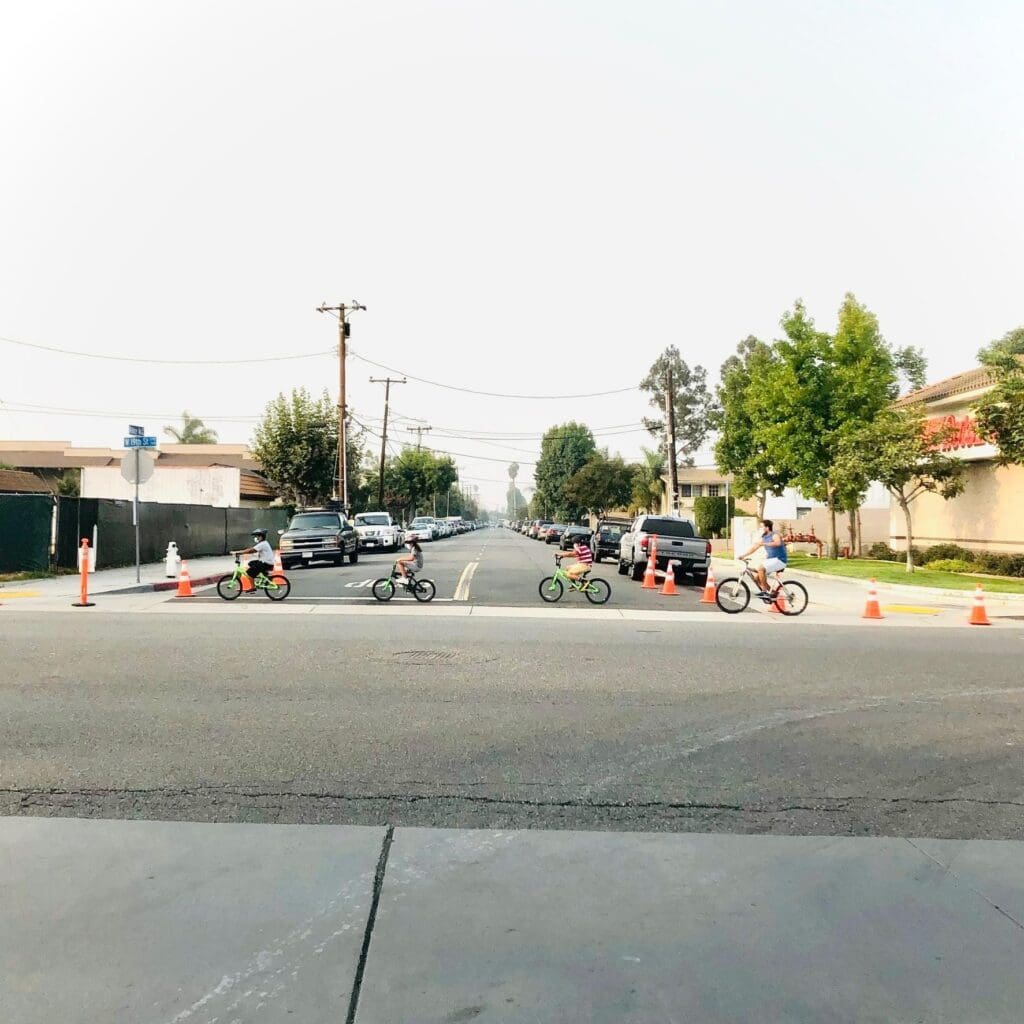
Although her time on the City Council is running short—she is term-limited after her term expires in 2026—Reynolds is optimistic that the gains her city has seen in recent years will continue and her city’s relationship with and ethos around transportation and movement has fundamentally shifted.
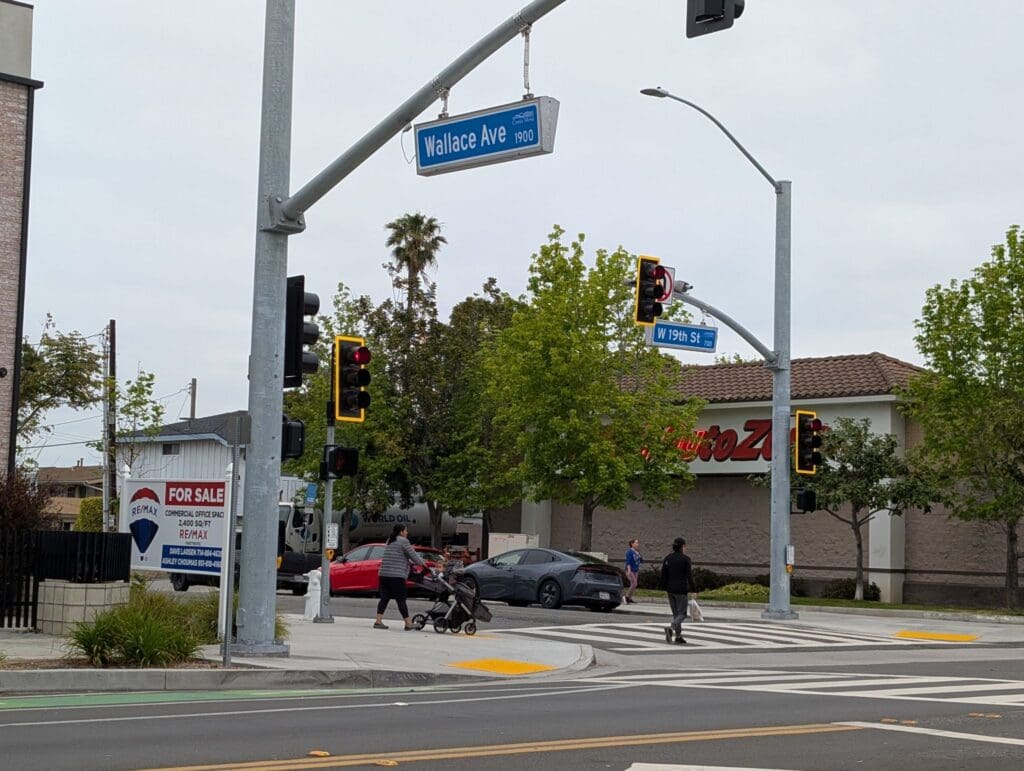
She is optimistic about the rezoning effort currently underway to help reshape the landscape of Costa Mesa to be more walkable and bikeable. She’s also heartened to see her community embracing physical changes such as those made at her “favorite intersection” of West 19th Street and Wallace Avenue, where a lighted, signalized intersection with curb extensions has dramatically improved pedestrian safety.
“What’s exciting to see is that candidates running for office now include safe streets and walkability in their platforms, reflecting the understanding that these are popular topics our community cares about,” Reynolds said.
This publication was made possible by the Centers for Disease Control and Prevention (CDC) (Contract #47QRAA20D003W). Its contents are solely the responsibility of the authors and do not necessarily represent the official views of CDC. These efforts are part of the CDC’s Active People, Healthy NationSM Initiative that is working to help 27 million Americans become more physically active by 2027.