
This success story follows Lauren Adkins, Walking College fellow and Long Range/Historic Preservation Planner for the city of Hot Springs, Arkansas, and efforts to invest in walkability and bikeability in the city.
Lauren Adkins is an architectural historian currently working as the long range/historic preservation planner for Hot Springs, Arkansas. The city of around 38,000 residents located in the Ouachita Mountains is best-known for its natural hot springs, its scenic beauty, impressive Art Deco buildings, and growing opportunities for hiking and mountain biking.
Adkins grew up in Hot Springs but left the city for college. She returned in 2022 to accept her current position because she was inspired by the city’s commitment to improving walkability. She has worked to implement the city’s comprehensive plans and others that include a focus on enhancing walkability and bikeability.
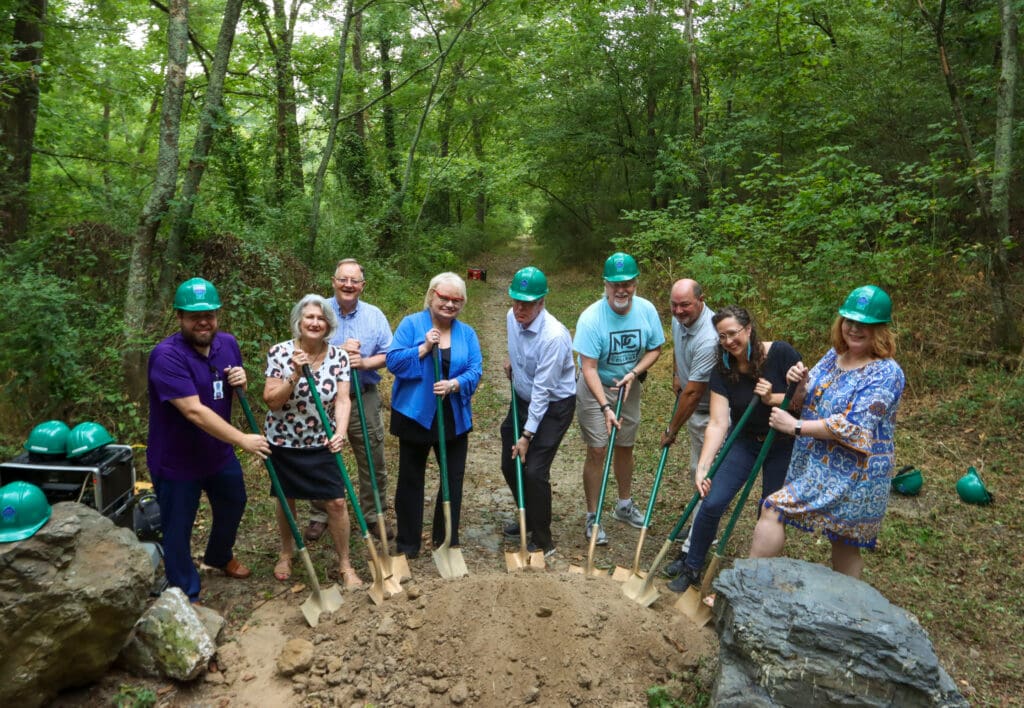
As part of the action plan she completed during the Walking College, Lauren identified specific active transportation projects to be funded as opportunities arose. Since completing her fellowship, Adkins has helped the city apply for $12 million in federal grants that to-date have resulted in $2.4 million in funding to design walking and biking trails, along with another $500,000 from the state of Arkansas. Because of the success of these efforts, the city hired a full-time grants writer, allowing Adkins to focus on other projects, including implementation of a plan that will combine historic preservation and housing affordability.
“Parts of the city are incredibly walkable,” Adkins said of Hot Springs. “The historic sections were built when walking was an important transportation mode and it shows.” Adkins points out that her city’s central business district has a Walk Score of 81, well above the average 31 citywide rating.
Adkins sees one of the best opportunities for improving walking in her city is the construction of new sidewalks. “Even without sidewalks, people currently use the shoulder and streets for walking, which is not safe,” she said. New building codes require sidewalks with all new developments, she said.
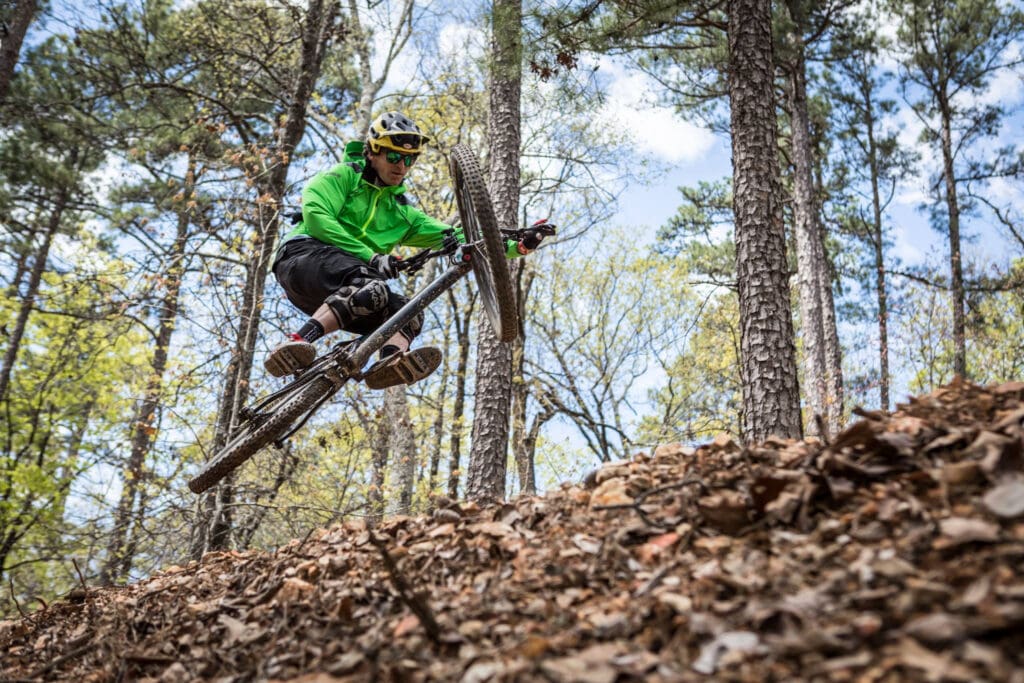
Adkins is also excited about the city’s efforts to expand its protected trail network, building upon what she described as the “highly successful” Hot Springs Creek Greenway Trail. That facility connects downtown to the southern city limits and ends at one of the city’s three lakes. Construction on a second trail began this summer, Adkins said, “and we have plans to build as many as four more trails,” bringing the number of protected multi-use trails in the city to six. This work builds upon the success of what Adkins described as the “very popular” Northwoods mountain biking trail system. “It has been a huge success and is regularly listed as one of the best trails in the state and one of the most popular tourism attractions.”
Spurred in large part by the surge in outdoor tourism during the pandemic, Adkins says her city sees the value of investing in such amenities as an important economic driver — one that she is hopeful Hot Springs will continue to invest in to yield measurable social and economic impacts.
WHAT WAS A HIGHLIGHT OF YOUR WALKING COLLEGE EXPERIENCE?
“I was so fortunate to be assigned to (Walking College mentor) Garrett Brumfeld’s discussion group.” Brumfeld relies on a wheelchair and focuses his work on creating places that accommodate all users. “I thought that I knew something about making routes accessible to everyone, regardless of physical ability, but his leadership helped me see even more clearly how to easily accommodate people in all plans.”
This publication was made possible by the Centers for Disease Control and Prevention (CDC) (Contract #47QRAA20D003W). Its contents are solely the responsibility of the authors and do not necessarily represent the official views of CDC. These efforts are part of the CDC’s Active People, Healthy NationSM Initiative that is working to help 27 million Americans become more physically active by 2027.