

As America Walks celebrates its 30th anniversary, this blog continues our series on the history of the National Walking Movement with stories covering key moments, decisions, and people spanning three decades.
When Ellen Vanderslice and the newly-formed Willamette Pedestrian Coalition in Portland, Oregon, started doing crosswalk actions in 1991, they “didn’t know whether other walking advocates anywhere in the world had organized.” These days, we are accustomed to having that type of information at our fingertips, but it was very different before the internet.
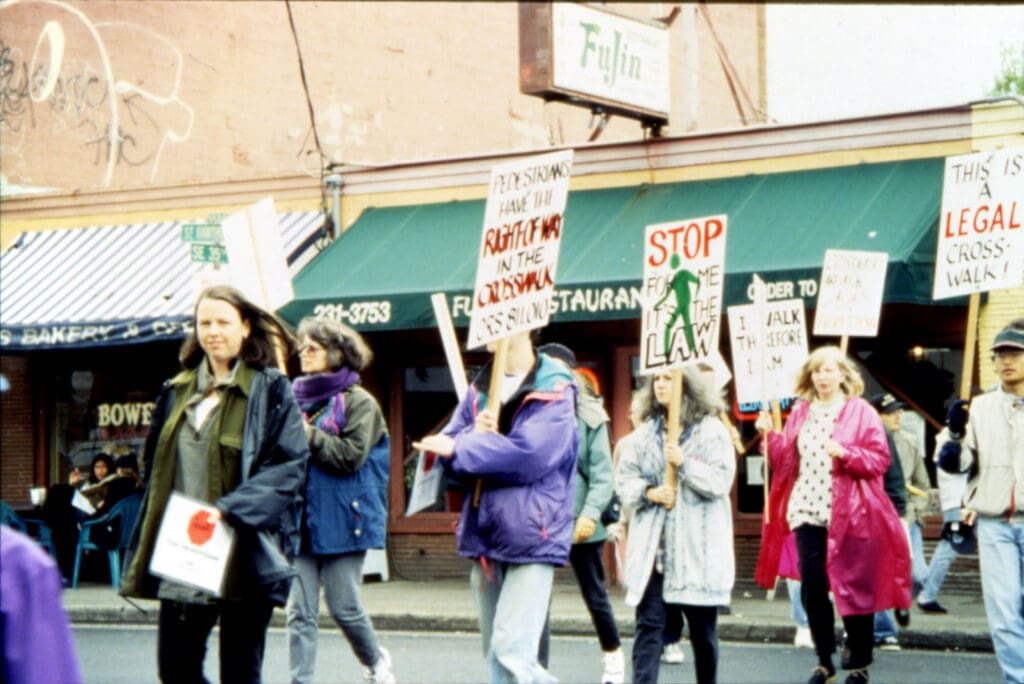
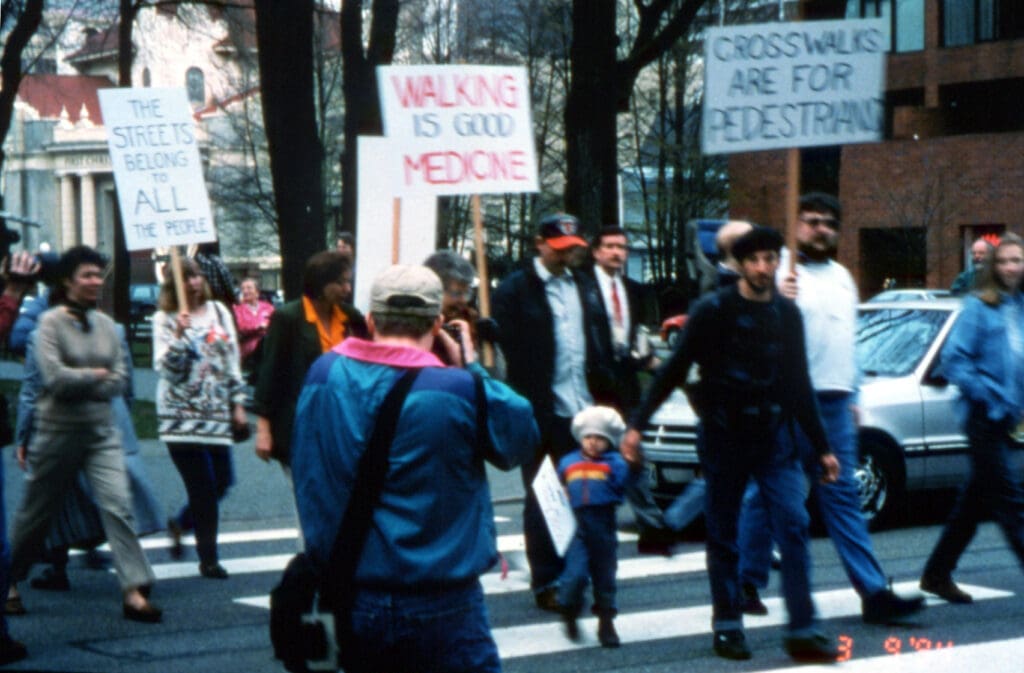
At the time, there were a few other groups. WalkBoston had started in 1990, inspired by Ottawalk, an even earlier advocacy organization in Ottawa, Canada. Over time, the Willamette Pedestrian Coalition also connected with groups in Seattle and New York City, and Ellen got to know the other leaders—some of whom were community organizers, while others were transportation professionals. For example, Ann Hershfang, co-founder of WalkBoston, had served as undersecretary of transportation for Massachusetts and was on the board of the Massachusetts Turnpike Authority.
There was a lot of camaraderie within the budding national coalition of local walkability advocacy groups. Leaders (who were all volunteers) would talk on the phone and occasionally visit their counterparts in different cities, and there was an overarching belief that they were “stronger together.” Ellen had not heard of WALK Austin in 1993 when, at a gathering, she picked up a trifold flyer labeled “Walking shouldn’t be hazardous to your health, but…” and realized that a new group from Austin, Texas, had copied the Willamette Pedestrian Coalition’s brochure and put their name on it! After a moment of surprise, she saw the light and exclaimed, “This is great; they didn’t need to start from scratch.”
They shared news, newsletters, and strategies, and learned from each other. Typical activities included educating the public, acting as a watchdog for good design, and demonstrating for walkers’ right-of-way. In Portland, the Willamette Pedestrian Coalition took to the streets with mass demonstrations to force motorists to obey Oregon’s “yield to pedestrians in the crosswalk” law. WalkBoston directed its energy to influence the “Big Dig” that threatened the walkability of the downtown district. By working in similar ways while also having their own unique projects, they were preparing the fertile ground in which America Walks would flourish.
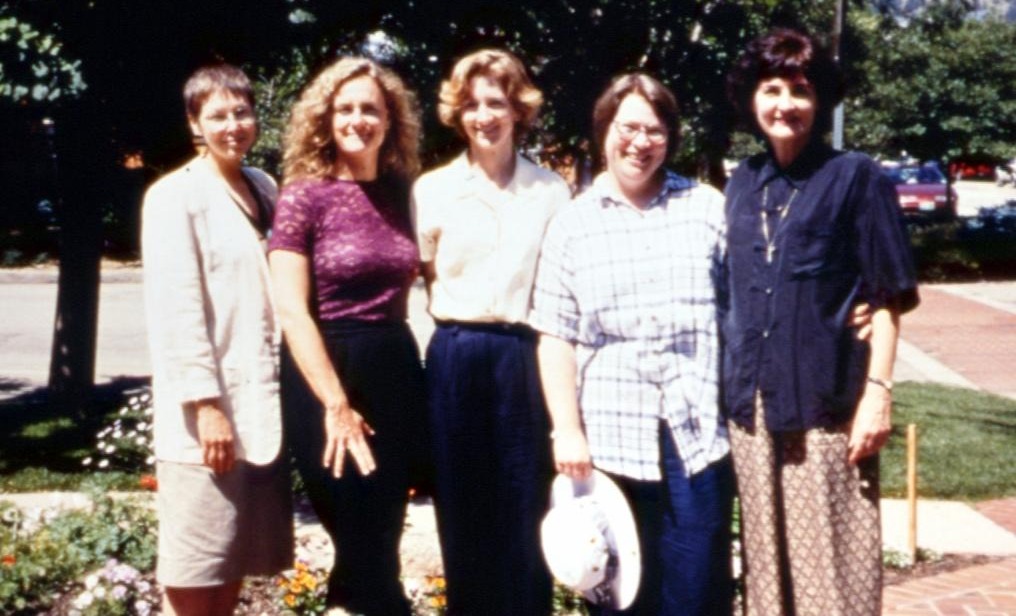
In 1996, the Bicycle Federation of America used some of its grant funding to put on a pedestrian advocacy summit in Boulder, Colorado. Ellen was invited, as were Mary Pat Lawlor (Feet First in Seattle), Katherine Shriver (WALK Austin), Randy Wade (Walk New York), and Dorothea Hass (WalkBoston). In a flurry of phone calls, they agreed that the time was right to form a national organization focused on walking, walkability, and pedestrian safety. They gathered in Dorothea’s room at the Boulderado Hotel, agreed on “America WALKs” as the name, created a simple logo and letterhead, and made the announcement the following morning.
According to Ellen, they all came from “local groups that ran on relationships and elbow grease,” and the fact that they had no funding and knew nothing about operating at the national level didn’t deter them at all. “We had a logo, letterhead, and unbridled enthusiasm. What more does a brand new organization need?”
To reflect on progress made and build momentum for the next 30 years, America Walks is hosting a 30th Anniversary Celebration Reception and “Future of Walkability” Visioning Workshop in Washington, D.C. on January 10, 2027. Find details and purchase tickets here.

